
GOAT AMRs for automotive plants
Automotive AMRs for just-in-time line feeding and sub-assembly transport
Why automotive plants choose GOAT AMRs
Automotive manufacturing relies on precise timing and continuous material availability. GOAT Robotics helps automotive plants automate intralogistics with autonomous robots that transport components, sub-assemblies and pallets across the shop floor and assembly lines.
GOAT AMRs replace manual forklifts and tugger trains, ensuring just-in-time delivery of materials to production stations. That removes line stoppages caused by material delays, reduces human fatigue and improves overall production efficiency — in both conventional and EV manufacturing.
- Automated line feeding and component transport
- Fewer line stoppages from late material
- Improved shop-floor safety and traceability
- Consistent material availability for high-precision assembly
How GOAT AMRs transform automotive intralogistics
In an automotive plant, parts travel from the receiving dock through stores and the kitting supermarket to every station on the assembly line — mostly by forklift, tugger train and manual trolley. Here is the same flow with GOAT AMRs and GT Studio fleet management.
- 01
Receiving dock to stores
Today
Forklifts unload trucks and stage pallets, crossing paths with people in busy aisles.
With GOAT AMRs
GOAT GT-XP pallet AMRs shuttle incoming pallets from the dock to stores, so forklifts stay on the dock and out of production aisles.
GT-XP - 02
Kitting supermarket
Today
Material handlers build kits and push them to the line on manual trolleys or a fixed milk run.
With GOAT AMRs
When the MES releases a sequence, GOAT GT Series AMRs carry the kit trolley or bins straight to the station that needs it.
GT Series - 03
Line-side delivery
Today
Stations hold extra stock to cover late deliveries — and still stop when a part runs out.
With GOAT AMRs
A GT-Button press or an MES signal creates a delivery in GT Studio, which sends the nearest free GOAT AMR. Stations get small, frequent, just-in-time replenishments.
GT Series - 04
Sub-assemblies between cells
Today
Seats, axles, dashboards and fixtures wait for a forklift or crane to move them between cells.
With GOAT AMRs
GOAT GTX AMRs (up to 2,000 kg) and GT-L latent-lifting AMRs move sub-assembly trolleys and fixtures between cells without a driver.
GTX Series - 05
Empties and tugger loops
Today
Empty bins and racks pile up at stations until the next milk run.
With GOAT AMRs
GOAT GT-XT tow robots pull trains of carts on long supply loops and bring empties back to the supermarket on the return leg.
GT-XT
Already running at GOAT customers
- GOAT engineered hardware safety circuits and multi-sensor redundancy into its AMRs to meet an automotive OEM’s safety standards for high-speed production.
What to measure after go-live
- Line stoppages caused by missing parts
- Line-side inventory at each station
- Forklift movements in production aisles
- Time from call to delivery
- Near-misses between people and vehicles
GT Studio logs every GOAT AMR mission, so these figures come from the fleet system rather than spot checks.
Automotive workflows GOAT AMRs automate
Line-side delivery
Sequence-based delivery of parts and kits from the supermarket to each station, triggered from ERP or MES.
Sub-assembly transport
GT-400 and GTX robots move heavier sub-assemblies, fixtures and tooling between cells.
Tugger trains
GT-XT tows multiple carts per trip on long, repetitive supply loops.
Empty-bin returns
Return trips collect empty bins and carts so the loop closes without an operator.
GOAT AMR applications for automotive: line-side delivery, wip movement, tugger trains, rack & cart transport
Recommended GOAT AMRs for automotive plants
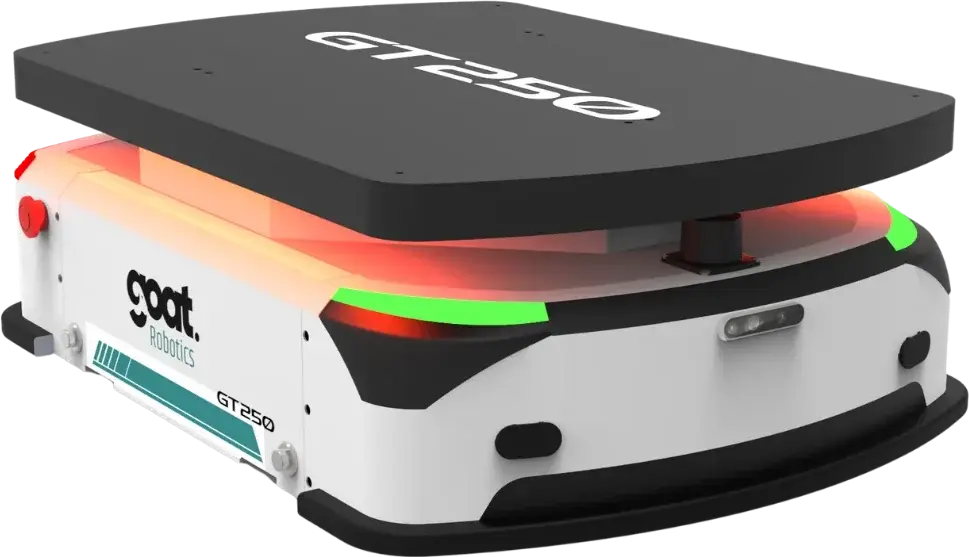
GT Series
Intralogistics AMRs
100–400 kg
Compact autonomous mobile robots for continuous material movement — bins, totes, racks and WIP — across shop floors and warehouses.
View GT Series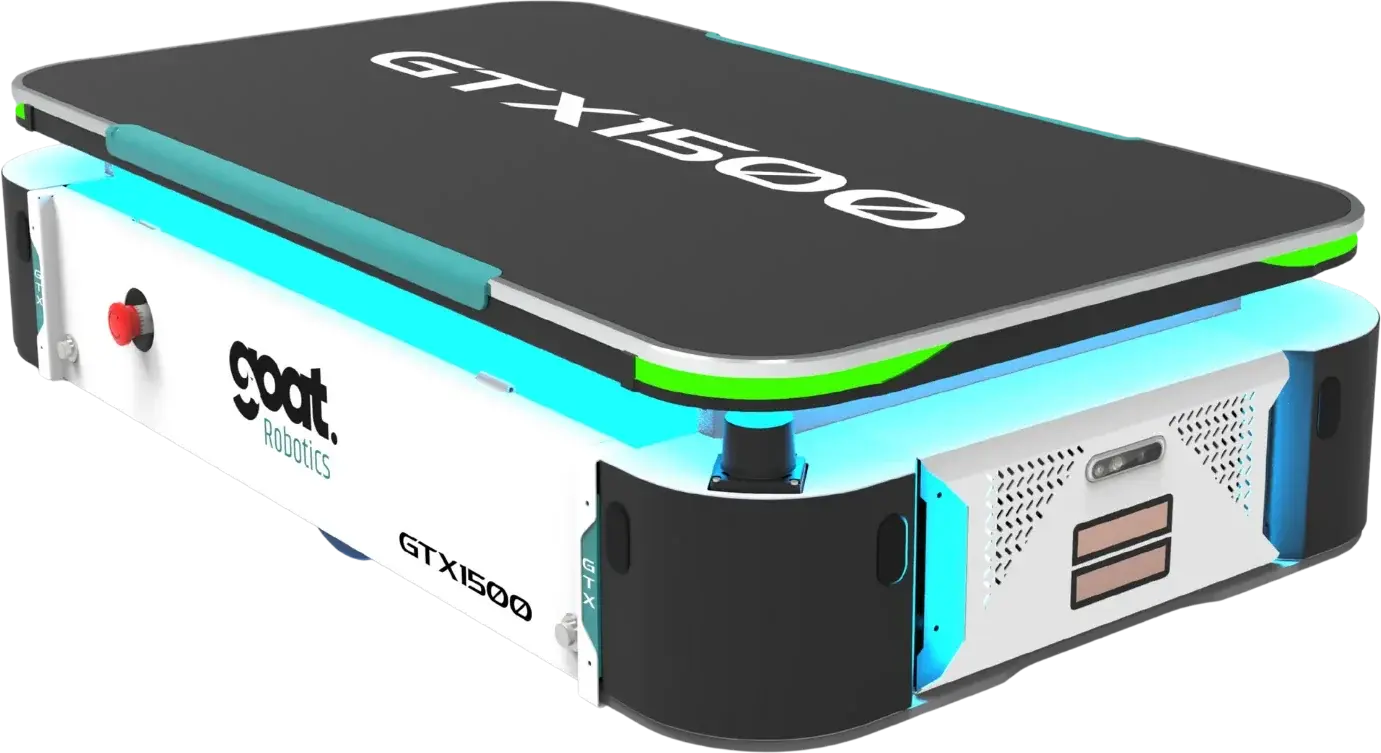
GTX Series
Industrial AMRs
500–2,000 kg
High-capacity autonomous mobile robots that move pallets, racks and heavy industrial loads up to 2 tonnes — without forklifts.
View GTX Series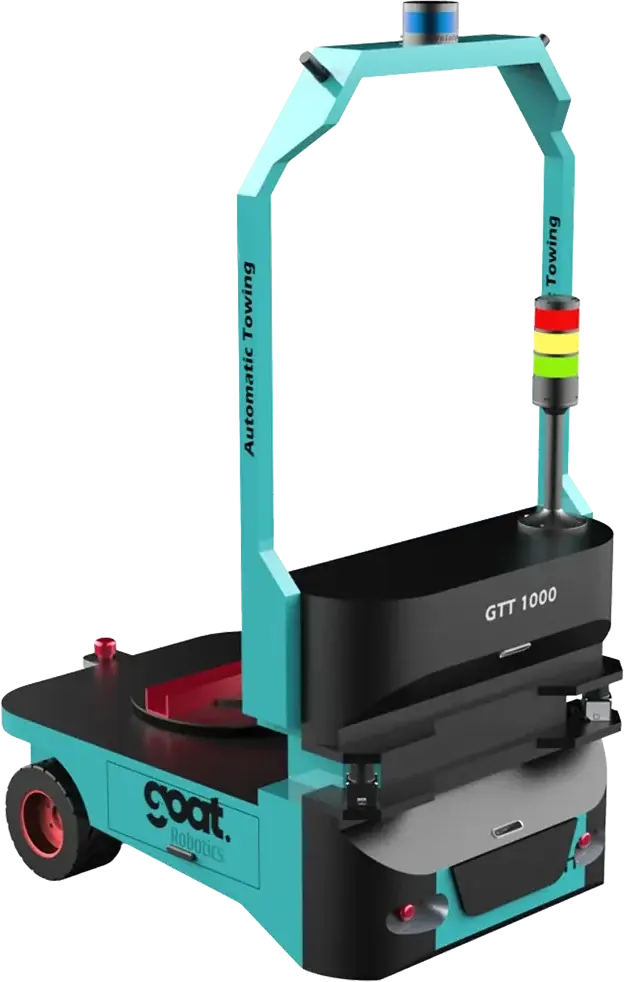
GT-XT
Autonomous tow robot
1,000 kg
An autonomous tugger that pulls trains of carts and trolleys, indoors and outdoors — batch material movement over long distances without lift-based AMRs.
View GT-XT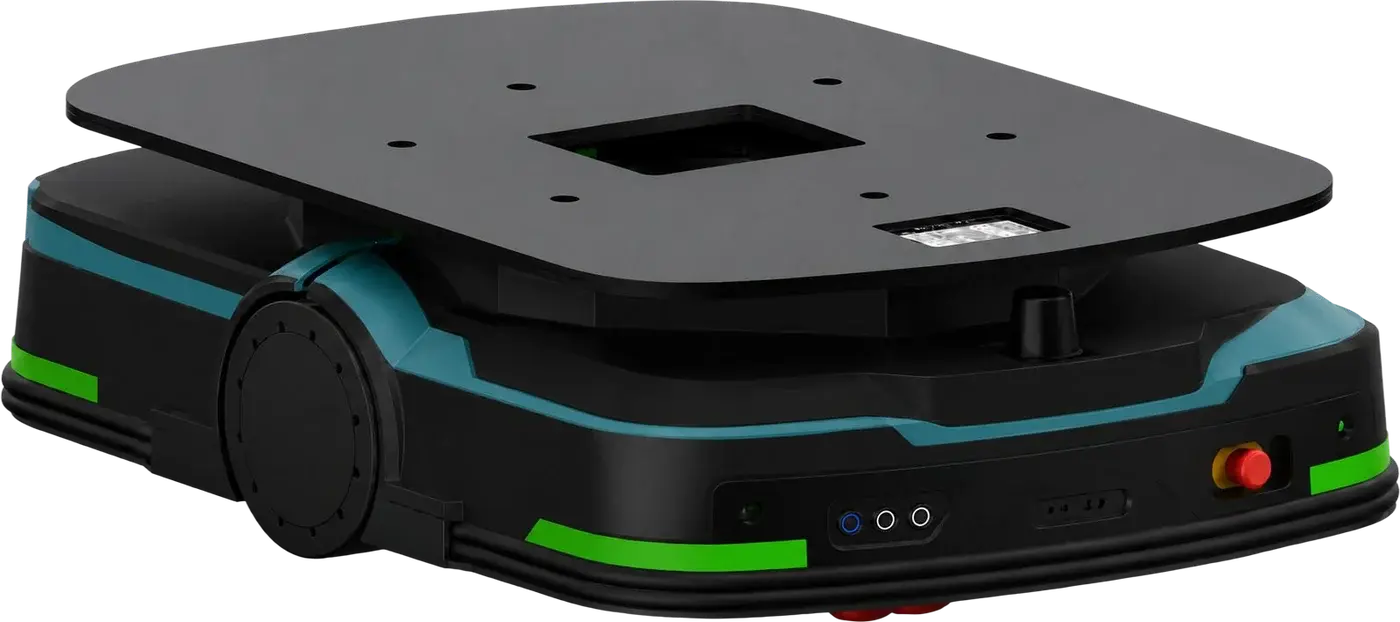
GT-L Series
Latent lifting AMRs
600–2,000 kg
Low-profile robots that drive under shelves, racks and carts, lift them electrically and deliver up to 2 tonnes — stopping within ±10 mm.
View GT-L Series


What automotive customers say about GOAT AMRs
Customer names withheld at their request.
Automotive AMR FAQs
Can AMRs work alongside people and forklifts on an automotive shop floor?
Yes. GOAT robots use laser scanners, depth cameras and emergency-stop systems to detect people and vehicles, slow down or stop, and then resume or re-route. For one automotive customer, GOAT implemented hardware-based safety circuits and multi-sensor redundancy to meet the plant’s safety standards.
Do we need to change our floor or layout?
No. GOAT robots navigate with SLAM and visual localisation, so no magnetic tape, QR codes or reflectors are needed. Routes are edited in GT Studio when the layout changes.
Can the robots integrate with our ERP or MES?
Yes. GT Studio integrates with ERP, MES, WMS and PLCs through APIs, webhooks and industrial protocols, so deliveries can be triggered by production signals.
GOAT AMRs for other industries


Automate automotive material movement with GOAT AMRs
We bring a robot and an engineer to your site. Tell us what you move, how far and how often, and we’ll recommend the right robot and fleet size.