In an era defined by rapid digital transformation, manufacturing and warehousing operations face growing pressure to improve efficiency, accuracy, and operational flexibility. Companies are expected to move materials faster, respond to changing production demands, and maintain consistent quality — all while managing labor shortages and increasing operational complexity.
At the center of these challenges lies intralogistics, the internal movement of materials, goods, and data within a facility. Traditionally, intralogistics relies on manual transport, fixed automation lines, or isolated robotic systems that operate independently. While these solutions have served industry for decades, they often struggle to adapt to modern, highly dynamic production environments.
A new approach is emerging — one that combines intelligent mobility with collaborative automation. By integrating Autonomous Mobile Robots (AMRs) with Collaborative Robots (Cobots), manufacturers can create flexible automation systems that adapt in real time to production needs.
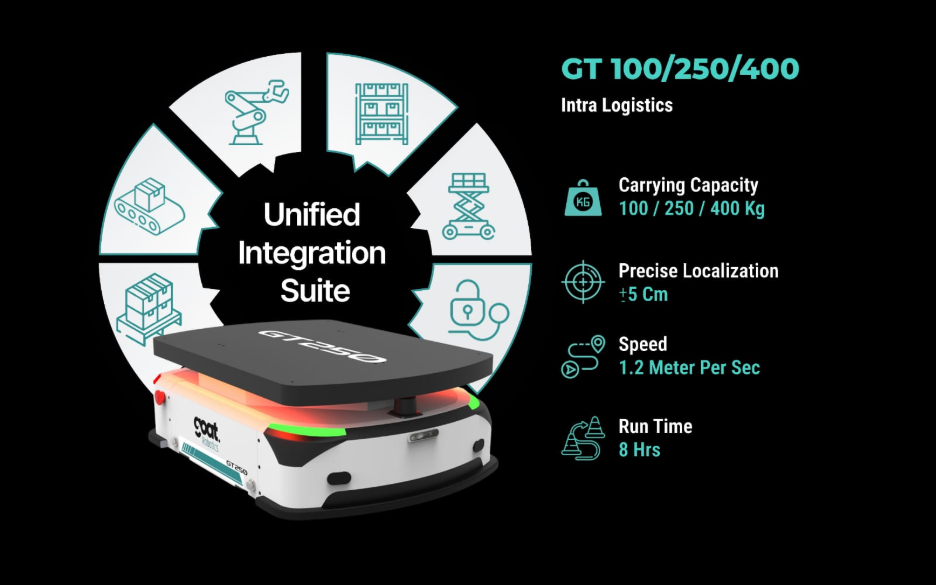
This is the approach adopted by Goat Robotics: bringing together mobile robotics and collaborative manipulation to create smarter, more responsive intralogistics systems.
Understanding the Core Technologies
Before exploring the integration itself, it is useful to understand the two technologies that make this approach possible.
Autonomous Mobile Robots (AMRs) are designed to move materials across factory or warehouse environments without fixed infrastructure such as magnetic tapes or rails. Using advanced sensors, mapping technologies, and AI-based path planning, AMRs can navigate dynamic environments while avoiding obstacles and optimizing routes.
Collaborative Robots (Cobots) are robotic arms designed to safely operate alongside human workers. Unlike traditional industrial robots that require safety cages, cobots are built with sensors and safety features that allow them to assist humans directly. They excel at precise and repetitive tasks such as picking, packing, assembly, palletizing, and inspection.
Individually, both technologies contribute significantly to automation. However, when combined, they enable a new level of operational efficiency.
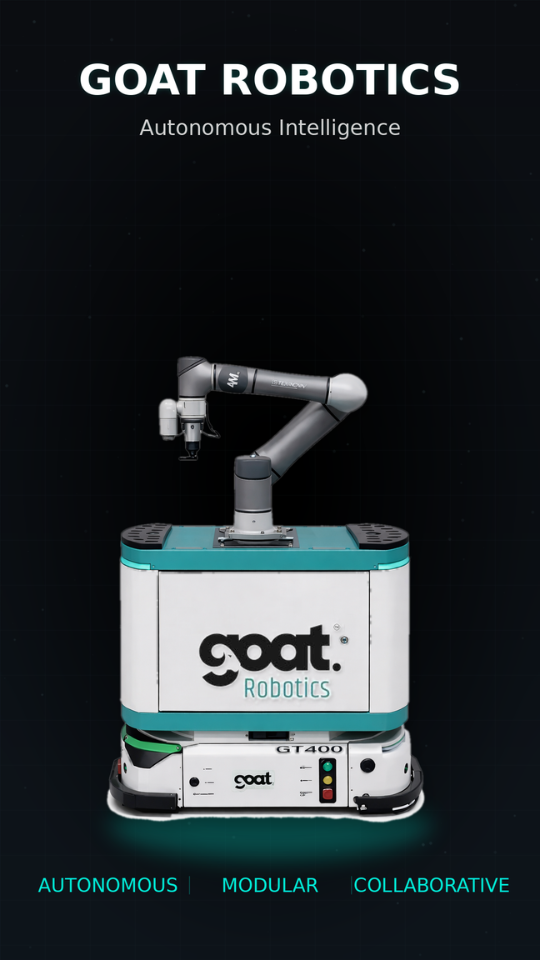
The Power of AMR-Cobot Integration
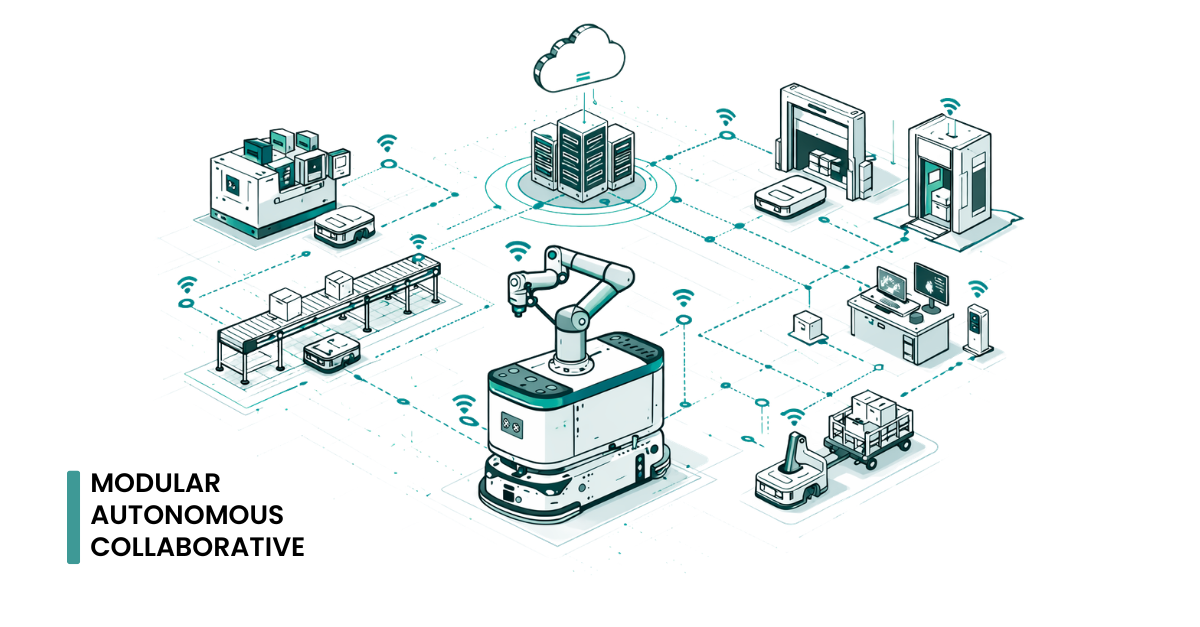
AMRs and cobots complement each other naturally within industrial workflows. While AMRs handle the transportation of materials between locations, cobots perform manipulation tasks such as picking, sorting, assembling, or inspecting products.
In practice, an AMR can autonomously deliver materials to a workstation, where a cobot takes over to perform the required operation. Once the task is complete, the AMR can transport the processed materials to the next stage of the workflow.
This combination eliminates many of the bottlenecks commonly found in traditional production environments. Instead of relying on fixed conveyor lines or manual material handling, factories gain a flexible system capable of adapting to production changes in real time.
Operational Benefits of AMR-Cobot Systems
The integration of mobility and manipulation provides several advantages for modern manufacturing and warehouse operations.
Enhanced Operational Flexibility
Traditional automation systems are often built around fixed production lines. Reconfiguring them can require significant downtime and investment. In contrast, AMR-cobot systems allow workflows to be dynamically adjusted. Robots can be reassigned to different tasks or stations based on changing production demands.
Increased Throughput and Efficiency
Automating both material transportation and manipulation reduces idle time between production steps. Materials arrive exactly when they are needed, and repetitive handling tasks are executed consistently by cobots. This synchronization significantly improves throughput and cycle time consistency.
Improved Worker Safety and Ergonomics
Many intralogistics tasks involve repetitive movements, heavy lifting, or awkward handling positions. By allowing AMRs to manage transportation and cobots to perform repetitive manipulation tasks, workers are free to focus on higher-value activities such as
supervision, quality control, and system optimization.
Scalable Automation Architecture
One of the key advantages of AMR-cobot systems is scalability. Facilities can begin with a small deployment — a few AMRs and cobots — and gradually expand as operational demands grow. This incremental approach allows companies to adopt automation without the large upfront investments typically associated with fixed industrial automation systems.
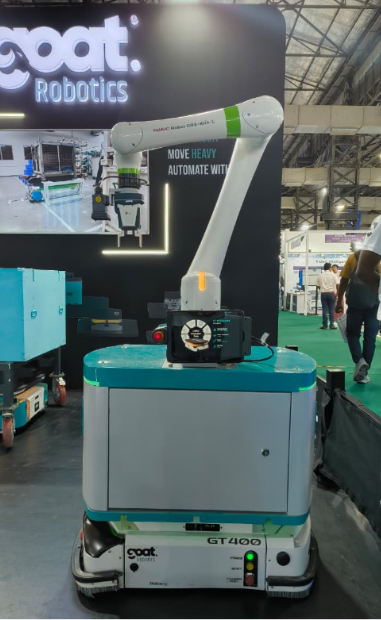
Goat Robotics’ Approach to AMR-Cobot Integration
At Goat Robotics, the focus is not simply on deploying robots but on orchestrating intelligent automation systems that operate seamlessly across the facility.
Smart Task Allocation
Goat Robotics’ fleet management platform dynamically assigns tasks between AMRs and cobots based on factors such as priority, location, and workload. This ensures that materials are transported and processed efficiently while minimizing idle time across the system.
Real-Time System Communication
For AMR-cobot workflows to function effectively, synchronization between mobile transport and robotic manipulation is critical. Through reliable industrial communication networks, AMRs and cobots exchange status information in real time, ensuring precise coordination between material delivery and task execution.
Data-Driven Operational Insights
Every movement, pickup, and delivery performed by the robots generates operational data. Goat Robotics leverages this data to support predictive maintenance, layout optimization, and continuous operational improvements — helping factories refine their intralogistics systems over time.
Real-World Application Scenarios
AMR-cobot integrations can be applied across a wide range of manufacturing and warehouse environments.
Dynamic Warehousing
In warehouse environments, AMRs can transport batches of goods to sorting or packing stations. Cobots then pick, scan, and place items into designated containers. Once processing is complete, the AMR moves to the next station without requiring human intervention.
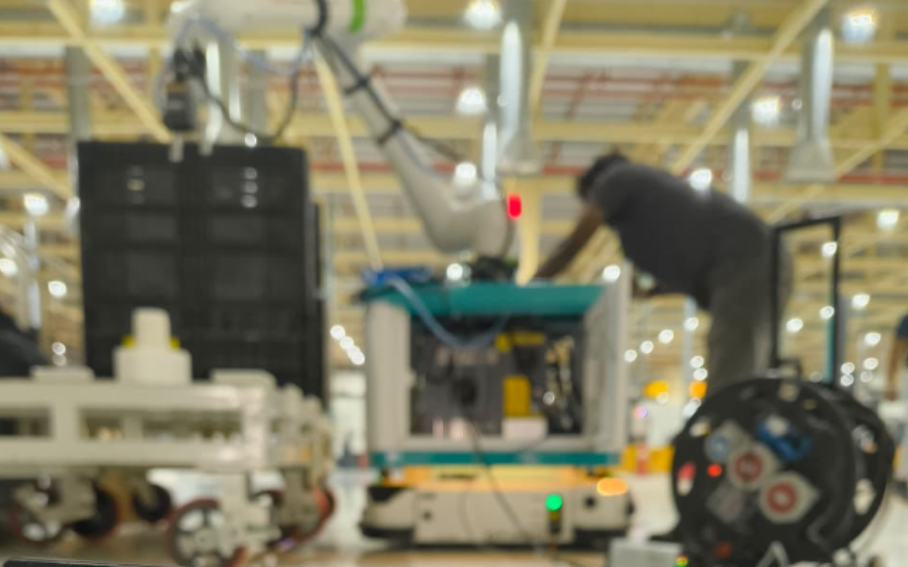
Automated Assembly Workflows
In manufacturing assembly lines, AMRs deliver components just in time to cobot workstations. Cobots perform the required assembly operations, after which the AMR transports the partially assembled product to the next production stage. This just-in-time material flow reduces inventory overhead while accelerating production cycles.
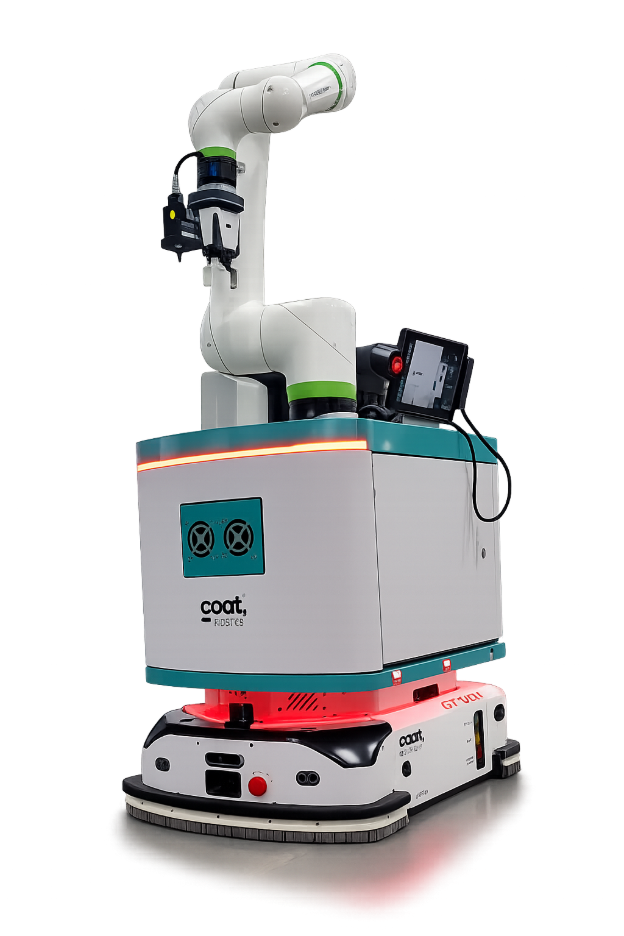
Automated Quality Inspection
Cobots equipped with vision systems can inspect products delivered by AMRs, identifying defects and ensuring quality standards are met without slowing production throughput.
AMR-Cobot Integration in Action
While the concepts behind AMR-cobot integration are powerful on paper, their impact becomes even clearer when observed in operation. These systems demonstrate how mobility and manipulation can work together to create seamless intralogistics workflows.
Impact on the Future of Smart Manufacturing
As factories increasingly adopt Industry 4.0 and smart manufacturing principles, AMR-cobot integration is becoming a critical enabler of digital intralogistics.
These systems allow manufacturing environments to become more adaptive, enabling production lines to evolve with changing product demands. At the same time, they improve supply chain resilience by ensuring materials move efficiently across the facility.
Perhaps most importantly, these technologies enhance the role of human workers. Instead of replacing human labor, collaborative automation empowers workers by reducing repetitive tasks and enabling them to focus on supervision, optimization, and innovation.
Conclusion
The integration of Autonomous Mobile Robots and Collaborative Robots represents a major step forward in intralogistics automation. By combining intelligent mobility with precise robotic manipulation, manufacturers can build operations that are faster, more flexible, and more resilient.
At Goat Robotics, our mission is to help factories move smarter, operate safer, and scale automation with confidence. Through seamless AMR-cobot integration, manufacturers can create connected production environments that are ready to meet the challenges of modern industry.